
Grand Theft Auto Online and Roleplay Explained in Plain Language
A beginner-friendly explanation of Grand Theft Auto Online and GTA roleplay: what each one is, how they differ, the vocabulary you'll hear, and practical things to check before investing time in a roleplay community.
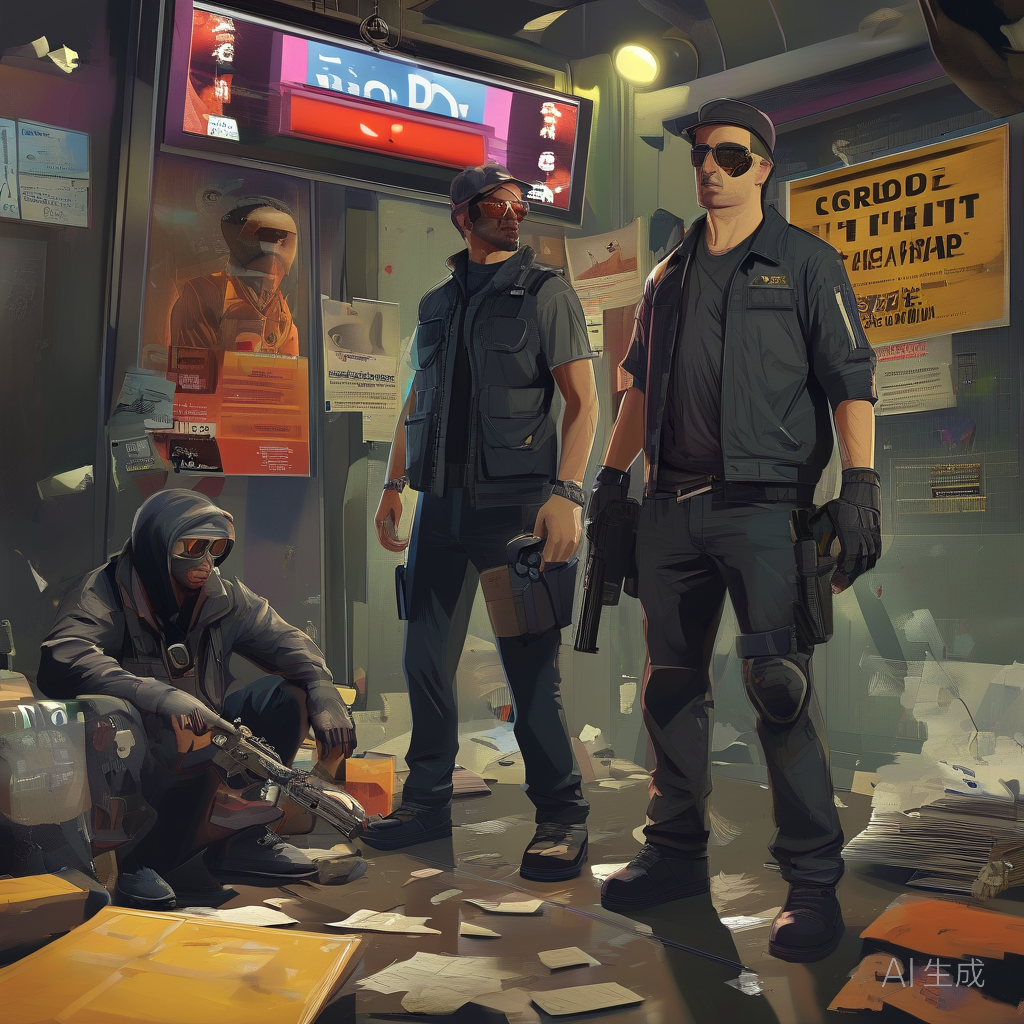
What this article covers
Grand Theft Auto Online and GTA roleplay get talked about as if everyone already knows what they mean. They don't. This piece builds the idea up from the basics: what Grand Theft Auto Online is, what roleplay adds on top of it, and which terms you'll keep running into. It sticks to general, widely known facts about how these things work and avoids guessing at specifics like player counts, server rules, or release details.
Start with the base game
Grand Theft Auto V is an open-world action game developed by Rockstar Games. It has three single-player protagonists and a large fictional setting, the state of San Andreas, with the city of Los Santos at its center. The single-player story is the part you play alone, following a scripted plot.
Grand Theft Auto Online is the separate multiplayer mode that shipped alongside the game. Instead of a fixed story, you create a character and play in a shared world with other people. You earn money, buy property and vehicles, and take on activities that range from solo missions to cooperative heists to competitive matches. Rockstar has continued to update the mode over the years with new content, though the exact schedule and contents of those updates are things you should verify on official channels rather than take from a summary like this one.
Two ideas matter here:
- Persistent world. Your character and progress stick around between sessions. The world keeps existing whether or not you're logged in.
- Shared space. Other real players are in the same map, which is the whole point and also the main source of friction.
What roleplay means in this context
Roleplay (often shortened to RP) is a style of play, not a separate game mode built by Rockstar. The idea is that you behave as your character would, within an agreed fiction, rather than treating the world purely as a scoreboard.
A few working definitions help:
- In character (IC): what happens inside the fiction — conversations, jobs, rivalries, deals.
- Out of character (OOC): everything outside it — technical problems, rule questions, scheduling.
- Character: the persona you play. In RP, your character is expected to have limits, needs, and a reason to do things.
- Fail RP: breaking the fiction, for example by acting on knowledge your character couldn't plausibly have.
- Meta-gaming: using out-of-character information — a stream, a Discord message, a friend's tip — to influence in-character decisions.
The common thread is consent and consistency. Roleplay works when everyone involved broadly agrees on what kind of story is being told and behaves as if the world is real within that frame.
How RP communities are usually set up
This is where it helps to be careful, because the details vary enormously from one community to the next. What can be said in general:
- RP groups are typically run by players or volunteer staff, not by the game's developer.
- They usually publish their own rules covering things like allowed violence, robbery, character death, and language.
- Many require an application or a short interview before you can join.
- Communication tends to happen on outside platforms, such as a Discord server, for announcements and support.
- Some use modified game clients or server software; others organize play within the standard game.
Anything beyond those broad shapes — specific server names, populations, economies, or application processes — changes constantly and should be checked with the community directly.
Why people find it appealing
The appeal of GTA Online is fairly obvious: a big open world, a lot of activities, and progress you can sink time into. Roleplay appeals for a different reason. It turns the same map into a stage. A delivery run becomes a story about a courier with debts. A traffic stop becomes a tense conversation. The interesting part isn't the mechanic; it's the other person's reaction.
It also gives players a reason to specialize. Some people want to run a business, some want to be a mechanic or a medic, some want the tension of a rivalry. None of that is scripted by the game — it's negotiated between players.
The realistic downsides
Plain language means naming the annoyances too.
- Rules density. Good RP communities have a lot of rules, and reading them takes real time.
- Time commitment. Scenes can be slow. Waiting for other players to respond is normal.
- Mismatched expectations. People arrive wanting different things — serious drama, casual chaos, or something in between — and that clash causes most of the friction.
- Moderation quality varies. Staff teams are made of people, and quality is not uniform.
- Technical setup. Depending on the community, you may need specific software, settings, or accounts.
None of that is a reason to avoid RP. It's a reason to treat joining a community the way you'd treat joining any group with its own culture.
Practical things to check before you commit
Before you invest hours in an application or a character backstory:
- Read the rules in full. If they're long, that's usually a sign the community takes itself seriously, for better or worse.
- Look at how staff communicate. Public announcements and support channels tell you a lot about tone.
- Ask what's expected of a new player. Good groups have an answer ready.
- Confirm what you actually need installed. Don't assume; ask.
- Check how disputes are handled. A clear process is a good sign.
- Start small. Lurk, watch, play a minor role before building an elaborate character.
Common questions, answered plainly
Is GTA roleplay an official Rockstar product? No. Grand Theft Auto Online is the official multiplayer mode. Roleplay is a community-driven way of playing, organized by players.
Do I need to own the game? To play Grand Theft Auto Online, yes — it's part of the game. What an individual RP community requires beyond that is up to them, so ask them.
Can I roleplay alone? Not really. Roleplay depends on other people responding to your character. Solo play is closer to ordinary sandbox play.
Is RP only about crime? No. Communities vary widely in what they emphasize; some lean into civilian and service roles.
Where do I find accurate update information? Official Rockstar channels. Community summaries — including this one — are useful for orientation, not for specifics like dates, prices, or content lists.
The takeaway
Grand Theft Auto Online is the game's official shared world: a persistent multiplayer space with its own progression. Roleplay is a layer of agreed fiction on top, organized by players who write their own rules and expect you to follow them. The vocabulary is simple once defined — IC and OOC, character, fail RP, meta-gaming — and the practical advice is even simpler: read the rules, ask questions, and start with something small.